

The Jama Masjid Mosque, which was born of a hazy dream of Emperor Shah Jahan, became a reality and was the largest Islamic place of worship in the Mughal empire.
History of Jama Masjid
The Masjid-i Jahān-Numā Mosque, popularly known as Jama Masjid, was built by Emperor Shah Jahan in the imperial city of Shakhahanabad between 1644 and 1656.
Legend has it that one night the emperor dreamed of a beautiful and majestic mosque which he marveled at but unfortunately did not remember its design when he awoke. A few days later, strolling through the narrow streets of Old Delhi he found a beggar drawing on the ground and was surprised to discover that the drawing was the mosque he dreamed of. Thus was born the Jama Masjid Mosque, the largest Muslim worship center in India at the time.
An area of 1200 m² was used for its construction, and it was built with red sandstone and white marble. The entire complex was built on a rise in the ground, so that to enter you must climb 30 steps. This is the origin of its name, which means "mosque that dominates the vision of the world" and I must tell you that from the courtyard of the mosque there is an incredible view of chaotic Old Delhi.
Shah Jahan spared no expense, the project cost one million rupees and more than 5000 workers were needed to erect it.
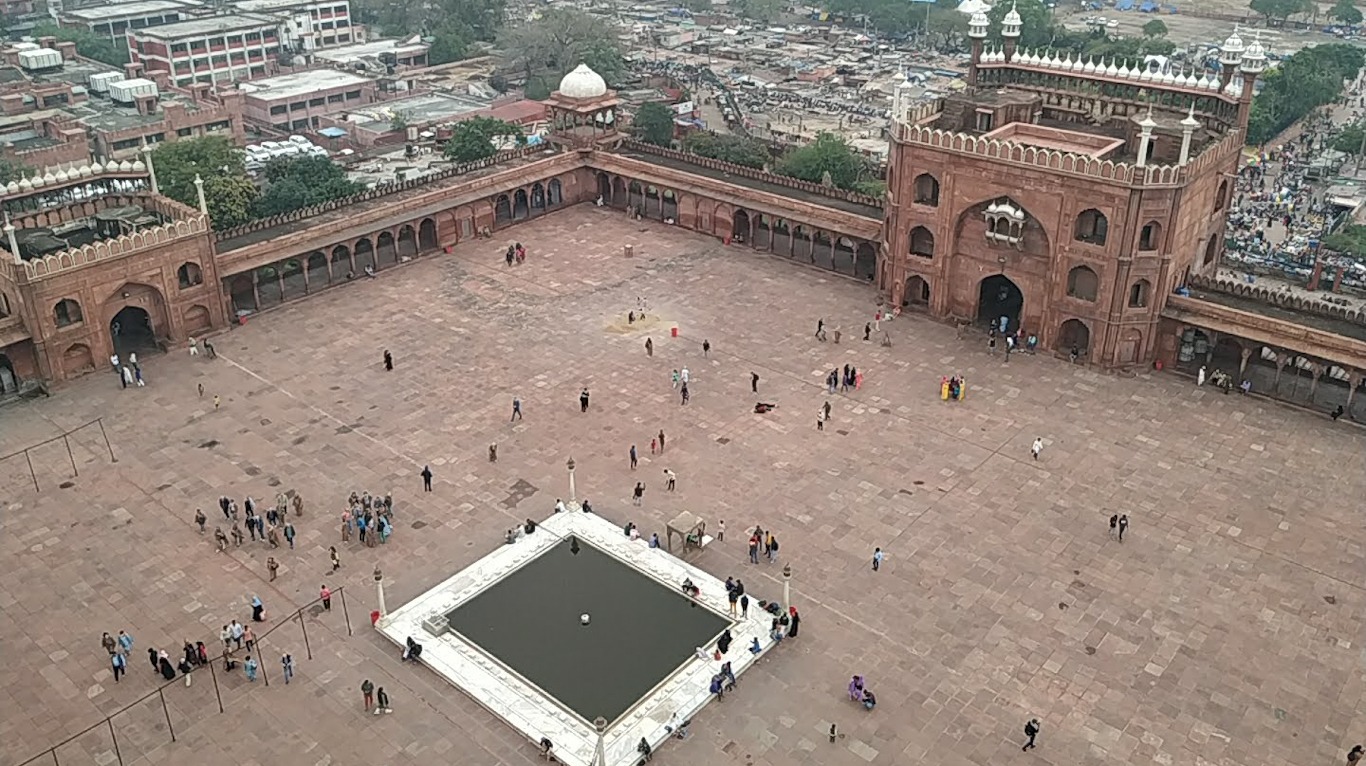
The complex has three entrance gates to provide access to the faithful. The main entrance (Gate 1) is preceded by 35 steps and is the most opulent entrance. The roof of the arch has a carved honeycomb design. This gate was exclusively for the entrance of the emperor and years later during the British Raj for the entrance of the Viceroy.
The north gate of the mosque has thirty-nine steps and was intended for the nobles. On the other hand, the entrance south has 33 steps and was intended for the entrance of common men without rank. Today you can enter indistinctly by any of the 3 but I recommend that you enter by the main one as it is the most emblematic.
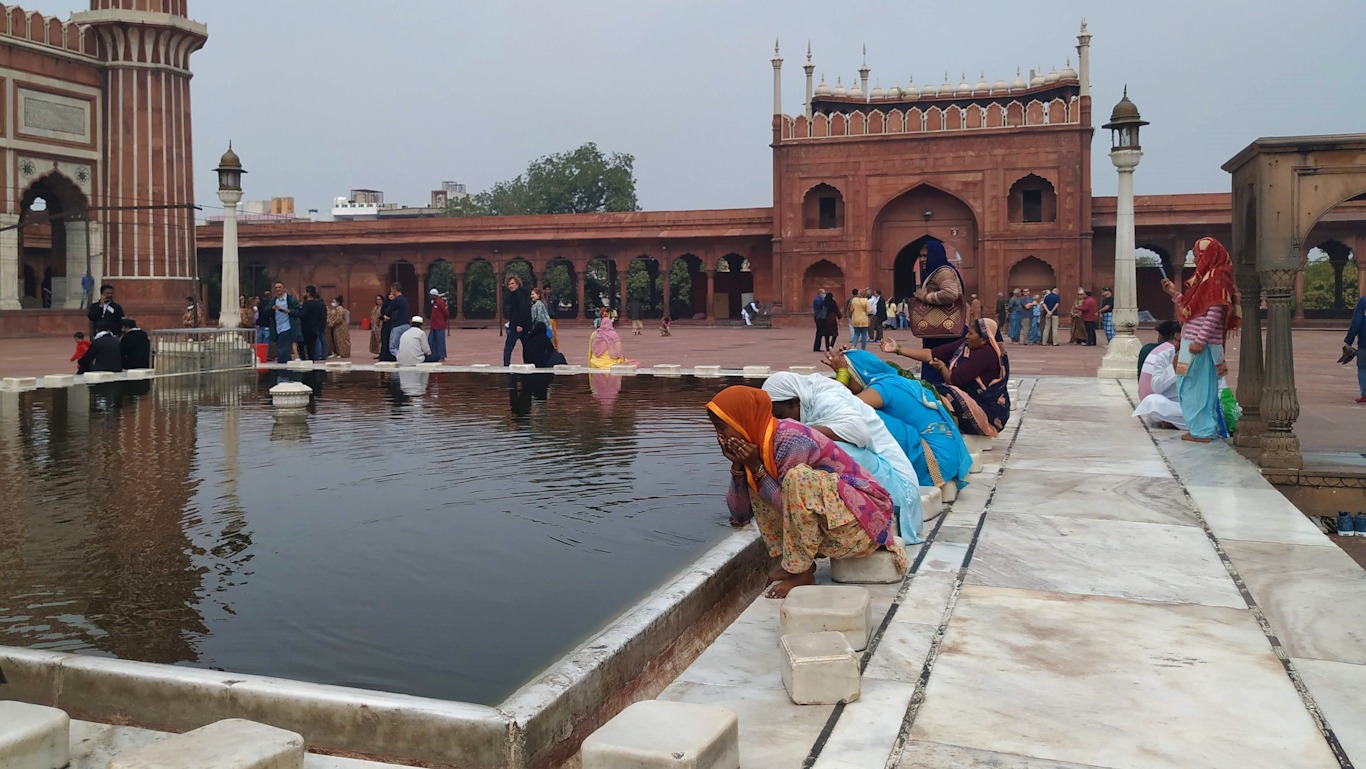
Once inside, there are a majestic courtyard that can accommodate up to 25,000 worshipers. The complex has a capacity of 85,000 people. In the center of the courtyard is the ablutions pond for purification rituals before entering the sacred space.
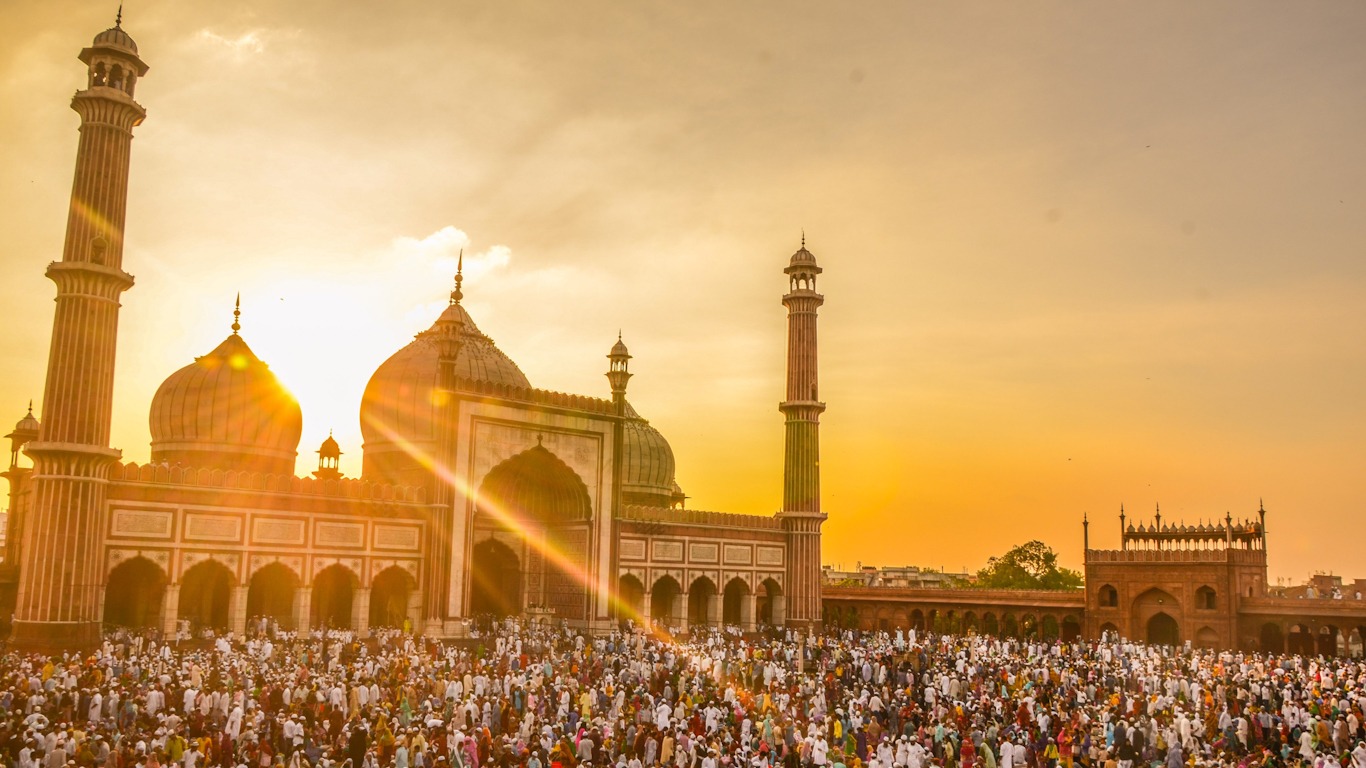
The complex has four towers and two minarets of 40 meters high. The two minarets have 5 floors with their respective balconies and 120 steps to reach the top. The views from the top are spectacular as there is a breathtaking panoramic view of the Old Delhi :)

The Jama Masjid Mosque was the emperor's last project, before he fell ill and was imprisoned by his own son in the Agra Red Fort,. His last work and one of the most important of the time.
Throughout its history, the mosque has suffered several incidents such as the 2006 explosion or the 2010 bombing. Currently, this area is heavily policed.
I didn't tell you but the Jama Masjid was also used as a military post during several years of British rule, but fortunately it has returned to its original purpose as a religious center.
Visit Jama Masjid in Delhi
The Friday Mosque or Jama Masjid is one of the most emblematic monuments of the city, so I recommend you to put it on your priority list. It is also just a 15 minute walk from the Delhi Red Fort so you can combine the visit.
When to visit Jama Masjid
It can be visited at any time of the year, but in the months of May to June in Delhi it is very hot and a bit oppressive.
Regarding time of day, I recommend that you visit the mosque first thing in the morning, since there are fewer people and the light is better for photos.
Whenever you can, avoid visiting on Fridays as this is the day of prayer and tends to become a hive of people. Although maybe that's what you want to experience:)
By the way, visiting the mosque and Old Delhi during Ramadan is quite an experience. During the day, silence reigns, but when the fast is broken, all the establishments offer their delicacies and are filled to overflowing.
How to get to the Jama Masjid Mosque in Delhi
To reach by metro: the nearest station is Jama Masjid and has direct access to the mosque through the main door nº2 (purple line). Another option is the Chawri Bazaar station (yellow line) which is only 500m away.
To arrive by train: the nearest train station is ISBT Kashmere Gate. It is at a distance of 3.5km, it is best to take a tuk tuk or cab from there.
Another option is to take a cab or tuk tuk directly with the Ola Cabs App from your location.
Practical information about Jama Masjid
Schedule: from 7:00 am to 12:00 pm and from 1:30 pm to 6:30 pm
Price: access to the mosque is free but if you want to climb the minaret you will have to pay 100INR.
Camera & video: you must pay a supplement of 300INR to enter with cameras (according to the sign at the entrance).
Food & beverages: food is not allowed but you can bring your own water bottle.
Prohibited: tripods are not allowed in the complex.
What to bring: You should dress conservative since you are in a religious place. Women should cover their legs, shoulders and head. There are gowns for rent at the entrance. You will have to take off your shoes before entering the enclosure, I recommend you take a bag to keep them but there is also a stand at the entrance to leave them in exchange of a nominal tip for the guy who guards them.
Guided tour: at the entrance and inside the mosque there are always a lot of very insistent guides. I recommend that you do not use their services and if you want a guide you should hire one in advance, as in many cases they are quite annoying.
Tips: remember that you are in a place of worship and you must follow the rules and be respectful of traditions. Do not miss the visit to the minaret as it is very worthwhile. You will have to climb about 100 narrow stairs and there is almost no space so be prepared for some friction with other visitors both up and down...it is a super narrow space. Once at the top you will have the best views of Old Delhi :)

Leave a Reply