
What does it mean Thali?
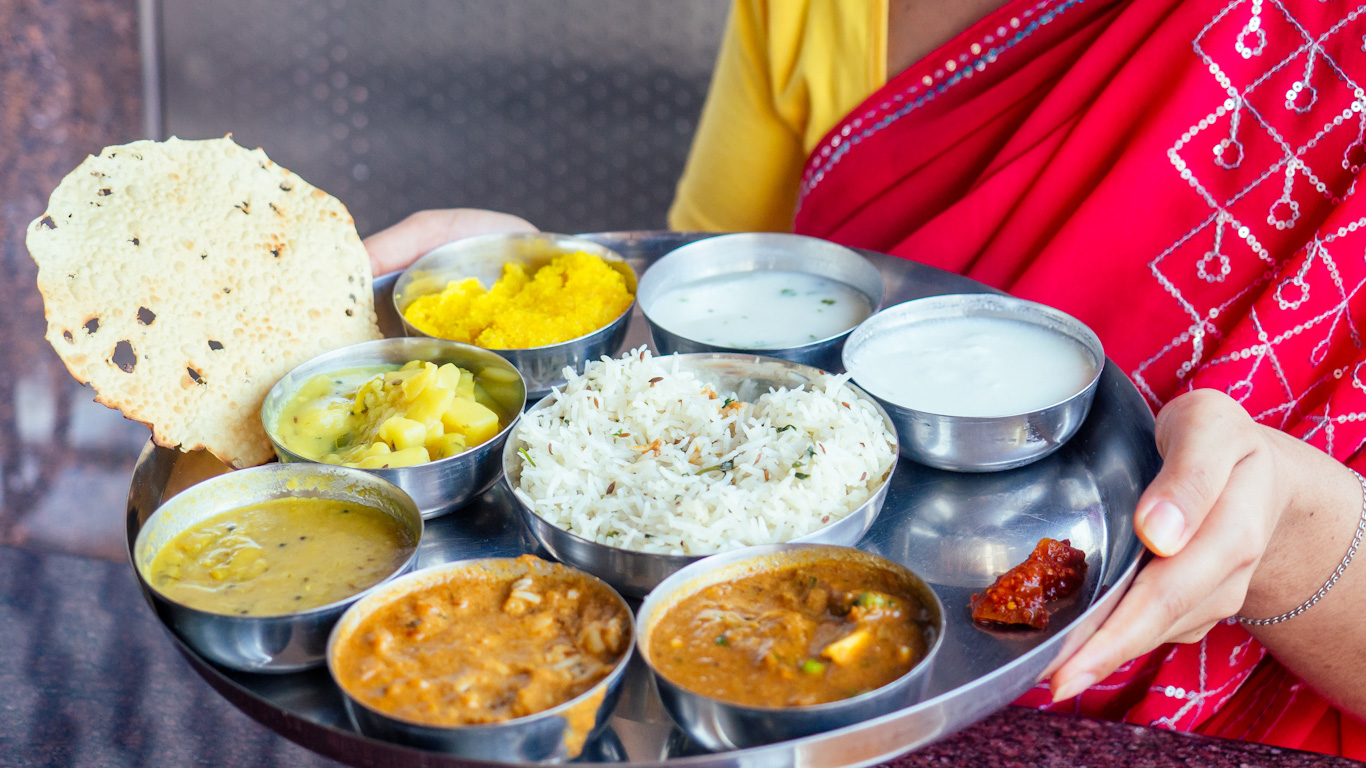
Thali in Hindi means "plate". With this word is denominated both the container-tray that contains the food and the set of culinary preparations that compose it.
What is the Thali?
The Thali is a platter with a selection of various dishes usually served in small bowls called Katori. The tray is usually made of stainless steel although they used to be made of copper (they are still used in medium-high priced restaurants). In the southern states of the country it is usually served directly on a banana leaf. Nowadays there are also single-use and biodegradable tableware options for this popular feast.
The Thali is similar to our daily menu, but in this case everything is served at the same time. In most restaurants you can ask for unlimited bowl refills until you are satisfied and they usually have very affordable prices.
What dishes should be included in a Thali
The selection of dishes that make up a Thali will depend on the region of the country. In each area the dishes change according to the season and their traditional dishes (which vary greatly throughout the Indian geography).
However, due to the Ayurvedic origin of this tradition and in order to achieve a dish with all the necessary nutrients, there is a common base of the components of an Ayurvedic dish. Thali :
- Grain: rice or bread
- Legumes: choice of lentils, chickpeas or beans (dal, sambar)
- Vegetables without sauce: a seasonal preparation and local vegetables
- Curri: either paneer (saag paneer), chicken (korma, butter chicken), fish, goat (rogan josh, laal maass)
- Chutney: seasoning made with fruits, vegetables, herbs and spices
- Yogurt: natural or Raita (yogurt with vegetables and seasoned)
- Pickles: made of mango, lime etc.
- Pappadum: a snack made with wheat, lentil or rice flour (it is crunchy)
- Dessert: Kheer (rice pudding), Halwa (sesame-based sweet), Burfi (candy made with sugar, condensed milk and nuts) , Gulab Jamun (small fried dumplings made of flour and condensed milk)
Regional variations of the Thali
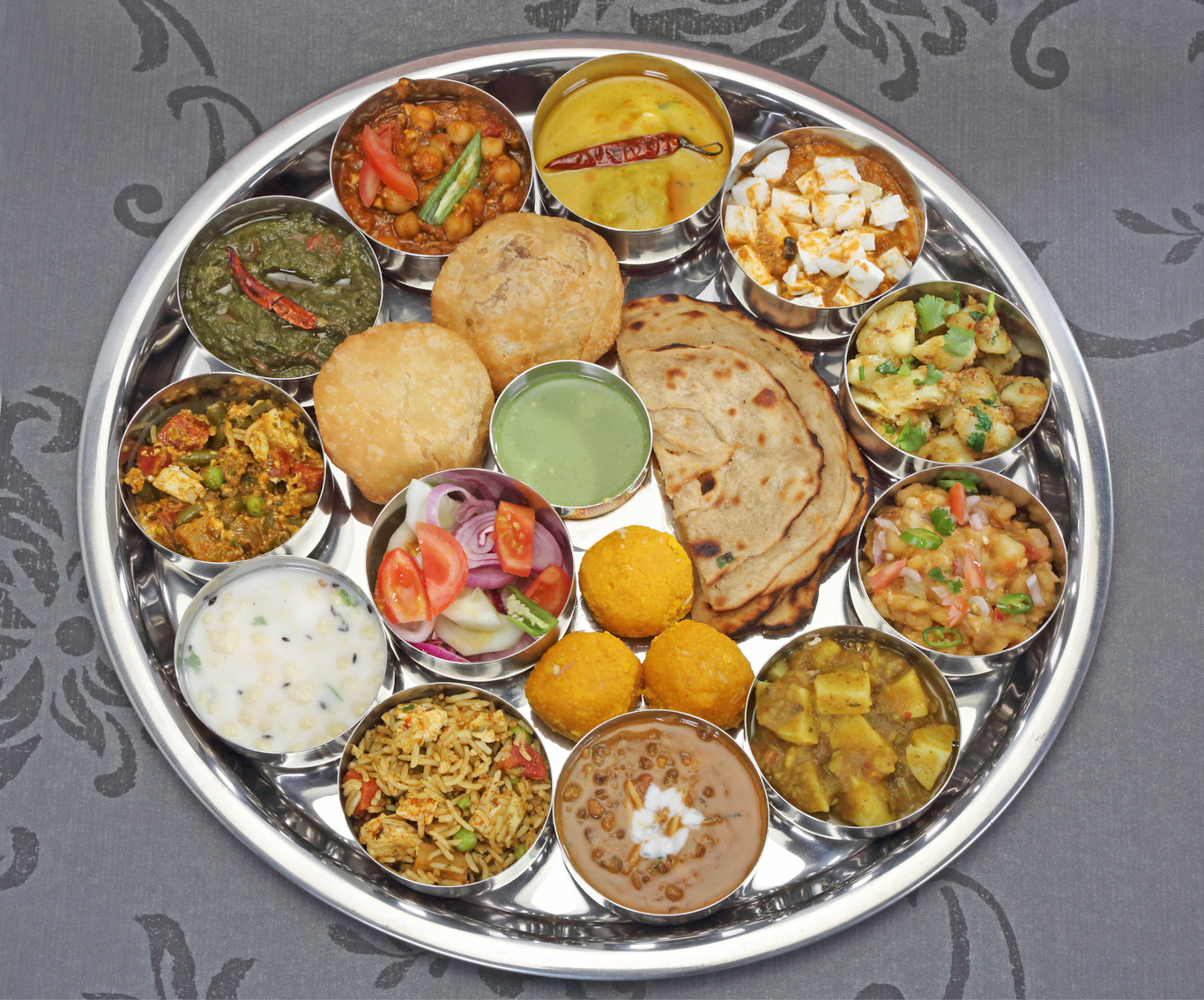
The Thali can be vegetarian or also contain meat or fish, everything will depend on the region and the religious traditions of each community. Here I detail some particularities of the Thalis of some regions of India:
Rajasthan:
The Thali of Rajasthan is one of the country's favorites. The dishes that stand out are the Ker Sangri (typical vegetable of the Thar desert), Churma (small balls of wheat dough that are baked and then crumbled), the Khadi (a curry based on yogurt, chickpea flour, turmeric and other spices) and the Kota Kachori (snack originating in Rajasthan) among others.
The star dish for a Thali Rajasthan's non-vegetarian is the Laal Maas, a lamb curry typical of the desert and the essential ingredient for the preparations of the State of the Maharajas is without doubt the Ghee, It is even served on top of the already cooked dishes as part of the feast of the Thali.
I can't fail to mention the dessert Moong Dal Halwamade from a lentil paste Moong with Ghee and nuts.
Goa:
Its coastal cuisine stands out for the use of coconut milk, banana, kokum, fish and seafood. Some typical dishes are the Halwa banana, Goan Dal Thoy (made with coconut milk, ginger and chili peppers) or the bread known as Bhakri and very typical of Goa
Punjab:
This region of India has a high production of grains and Basmati rice. In addition, as in other areas of the North, the oven is widely used. Tandoor for your preparations.
A unique dish of this area is the Sarson Ka Saag (curry made with mustard leaves and spices) in addition to the Makki Ki Roti (bread based on corn flour and without yeast).
To add a sweet touch to the feast, they usually serve slices of Jaggery (unrefined palm sugar).
Kashmir:
In the Kashmiri cuisine, the basic ingredient is the rice and the consumption of meat is high.
As regional dishes I highlight the Aloo Dum (curry made from potato), Chestnut Chutney (the chestnut is a very typical ingredient in Kashmir and they use it a lot in their gastronomy).
One of the most typical desserts is the Phirni (dessert made with milk, rice and cardamom) and they always finish their meal with a Kashmiri Kahwa (a green tea infused with saffron strands, cardamom and cinnamon). Very popular is the Kashmir Chai also called Noon Chai or Sheer Chai (this is a salty tea made with black tea, milk, salt and baking soda).
Kerala:
This Indian state is known as "The land of Spices". Some of its most outstanding ingredients are coconut, fish and seafood, the tapioca (the most commonly used starch-rich ingredient in this region).
Rice (white or red) is the central dish of the Thali. The most popular bread is Poori.
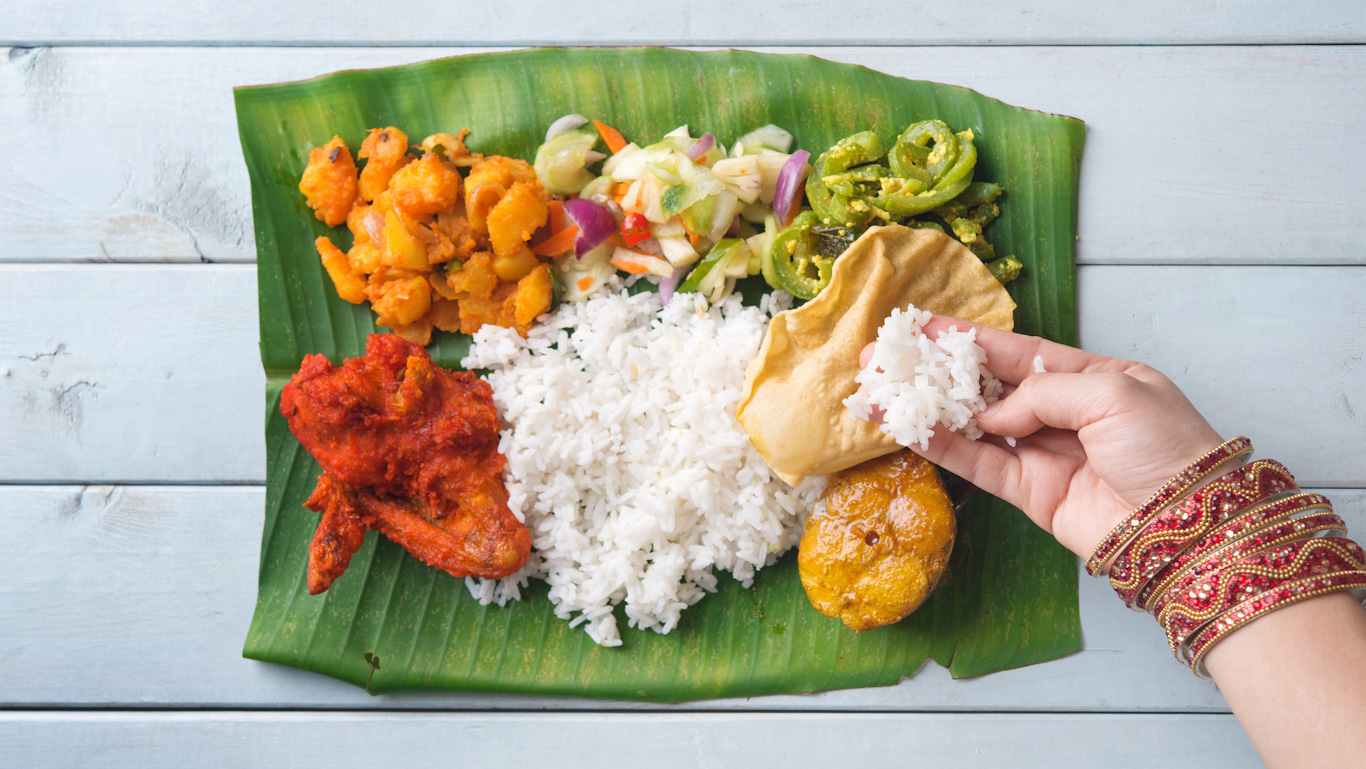
The dishes that mark the personality of this state in their Thali are the Sambar (curry made with lentils and highly spiced vegetables), Rasama (tomato soup, tamarind and spices), Thoran (vegetables sautéed in coconut oil and grated coconut), Avial (vegetables with yogurt, grated coconut and curry leaves), Pullisherry (a high-acid dish made from vegetables, yogurt and shredded coconut) and the banana fritter in coconut oil.
The Chutney most consumed is the Chammandi (based on fresh coconut, mango or tamarind, plus chili peppers and coconut oil).
The Thali is often accompanied by Sol Kadi (a beverage made from coconut milk) or Sambaram (drink made with buttermilk, green chili peppers, ginger and spices)
Sadhya: the Thali of festivals and weddings in Kerala
Sadhya in Malayali means "banquet". It is a Thali very common for the celebration of festivals such as Onam or for traditional weddings and all kinds of festivities.
If a Thali usually has between 10 and 14 dishes, the Sadhya is composed of about 24 different dishes.
The main dish is always white rice, which accompanies the rest of the preparations and is always served on a banana leaf.
The buttermilk usually served at the end of the meal. The dessert par excellence is Payasam, made with wheat noodles (it can also be made with rice or millet) and coconut milk, Jaggery plus cardamom and walnuts or cashew nuts.
Origin of Thali
According to the Ayurveda (ancient Indian medicine) a balanced and nutritious diet is the basis for good health. To this end, each meal should be composed of the six tastes (shad rasa) and thus promote good digestion and elimination.
- Sweet (Madhura): grains, dairy products, sweet fruits (mango, peach, banana), vegetables (avocado, pumpkin, yam), Jaggery, nuts (cashew nuts, almonds)
- Acid (Amla): yogurt, buttermilk, miso, citrus fruits (orange, grapefruit), tomatoes
- Salado (Lavana): salt, celery, olives
- Spicy (Katu): bell peppers, onion, garlic, ginger, asafetida, cumin, cloves
- Bitter (Tikta): coffee, chocolate, fenugreek, eggplant, sesame
- Astringent (Kashaya): tea, turmeric, red wine, green banana, jackfruit
In addition to flavors, the Thali also plays with textures, which are important since according to Ayurveda, all the senses are used to eat.
Thali: How to eat the typical dish of India
For the experience to be complete and for the digestion process to be correct, according to Ayurveda we have to follow an order to eat the dishes of the Thali (they are usually placed in that order when serving).
You should start with the vegetables both in curry and in their dried versions (without sauce). Follow with the legume dish and then eat the Rasam. All dishes are accompanied by rice.
Yogurt or raita, mixed with rice is also eaten at the end to refresh the palate and help with the digestion process.
It is common eat with the hands to ensure that we mix the rice well with the rest of the ingredients and also to make sure that the portions that are taken to the mouth are not too large.
I hope you find this guide to India's most popular dish, Thali, useful and that you enjoy it with all your senses :)

Leave a Reply