

Actual diary of an ayurvedic cleansing process in South India
I arrived at the medical center one humid Kerala afternoon. The sea was right in front, but it was not a tourist landscape; it was a constant sound that came through the window even at night. The building was simple, almost clinical. No candles, no pretentious spirituality. Medical history, medical examination, pulse, tongue, very precise questions.
The doctor was clear: for 21 days the body was going to work. My task would be not to interfere.
The routine began the next day.
DAYS 1 - 3
Begin to soften
At five o'clock in the morning the alarm clock rings. I'm surprised to wake up without looking at my cell phone. I leave it on airplane mode most of the day. That gesture alone changes something in the nervous system.
At half past five there is a gentle yoga and breathing session in front of the sea. Slow, sustained movements. Nothing demanding. I realize that normally I exercise to get active; here I do it to regulate myself.
At half past six comes the most challenging moment of the day: medicated ghee. A whole glass on an empty stomach. Warm, dense. In Ayurveda this phase is called Snehapana. The goal is for the oil to penetrate the tissues and begin to release accumulated toxins. Not only food toxins: also inflammation, chronic stress, incomplete digestion.
The first day I tolerated it well.
The second appears a slight nausea that lasts all morning.
On the third I feel my body heavy, my head sluggish and a kind of mental fog.
I am not sick. I am mobilizing.
Breakfast, around eight o'clock, is very mild kichari: white rice and mung dhal cooked for hours until almost broken down. Nothing cold, nothing raw, nothing stimulating. All warm. Everything easy to digest. The idea is not to generate new toxins while the body begins to release the old ones.
Mid-morning I have the Abhyanga massage. Two therapists work with hot oil in a synchronized way. It is not a relaxing massage as in the West. It is repetitive, rhythmic, deep. The goal is to pacify Vata, the principle of movement in Ayurveda, responsible for the nervous system and anxiety.
Then I enter the steam box (Swedana). The heat opens the channels for the toxins mobilized by the oil to pass into the digestive tract.
I go out sleepy. I take a nap without realizing it. My body is clearly in internal mode.
At night, around nine o'clock, I'm already in bed. And here is the first real change: I sleep soundly. No intermediate awakenings. No checking my phone at midnight. The reduction of screens is helping more than I imagined.
DAYS 4 - 6
The body enters the process
The ghee increases every morning. The feeling of heaviness too. I'm not really hungry anymore. I eat because I have to, not because my body asks for it.
The diet is still kichari, sometimes even more liquid. All very simple. I begin to notice that when the food is so basic, the mind is also simplified. No cravings, no decisions.
At eight o'clock in the morning, after ghee, I find it hard to concentrate. My head feels sluggish. The doctor explains to me that this is normal: the oil is releasing toxins that circulate in the blood before being eliminated. This “fog” is part of the process.
Daily massages and steam continue. Sweat starts to smell different. Stronger. This is a clear sign of elimination.
Emotionally I am more sensitive. Not dramatic, but more vulnerable. I realize how much I use work and constant stimulation as a way of not stopping.
Sleep gets even better. I go to bed around 9:30 and fall asleep in minutes. No insomnia. No circular thoughts.
DAY 7
Preparation for disposal
The doctor tells me that the toxins are already in the digestive tract. Tomorrow will be the purge.
That day the food is even more reduced. Very boiled rice, almost rice water. Nothing solid. The idea is to facilitate elimination the next day.
I feel a mixture of nervousness and curiosity.
DAY 8
Virechana - the purge
First thing in the morning I take the herbal preparation. Then I wait.
Elimination begins a few hours later. It is intense but controlled. I go to the bathroom several times during the day.
In Ayurveda, Virechana mainly eliminates excess Pitta: inflammation, internal heat, irritability, overexertion.
Between each evacuation I notice something very clear: my head is surprisingly clear. There is a mental clarity I haven't felt in years.
I don't eat anything solid that day. Just warm water and, in the late afternoon, some very soft boiled rice.
I am physically tired but mentally light.
That night I sleep soundly. No restless dreams.
DAYS 9 - 11
Digestive reconstruction
After purging, the digestive fire (Agni) is weak. Food is reintroduced little by little: first rice water, then very soft rice, then light kichari.
My digestive system feels extremely sensitive. But also clean. No bloating. No heaviness.
My hunger starts to regulate. It appears at specific times and disappears after eating. No emotional snacking.
I keep getting up at five o'clock. Yoga feels different now: more presence, less resistance.
Screen contact remains minimal. I realize how much that reduces basal anxiety. Not having constant notifications is almost therapeutic in itself.
DAYS 12 - 15
Shirodhara and mental treatment
Start the Shirodhara: warm oil falling continuously on the forehead for about 30 minutes.
The first session is hard for me. The mind tries to think. By the third session I notice that something regulates. I don't fall asleep, but I enter a state of deep calm.
In Ayurveda, Shirodhara stabilizes Vata in the mind and regulates the central nervous system.
After each session I leave with a sense of clarity and emotional stability.
The diet remains simple. Nothing raw, nothing cold, nothing stimulating. I'm starting to notice that I don't need coffee anymore. I don't have strong energy slumps.
Sleep continues to be one of the biggest changes. I fall asleep quickly and wake up rested before the alarm clock goes off.
DAYS 16 - 19
Basti - regular from the colon
Medicinal enemas (Basti), considered the main treatment for Vata, begin.
The colon, according to Ayurveda, is the seat of the nervous system. To regulate it means to stabilize mind and energy.
Before treatment I eat soft rice or light kichari. Never heavy.
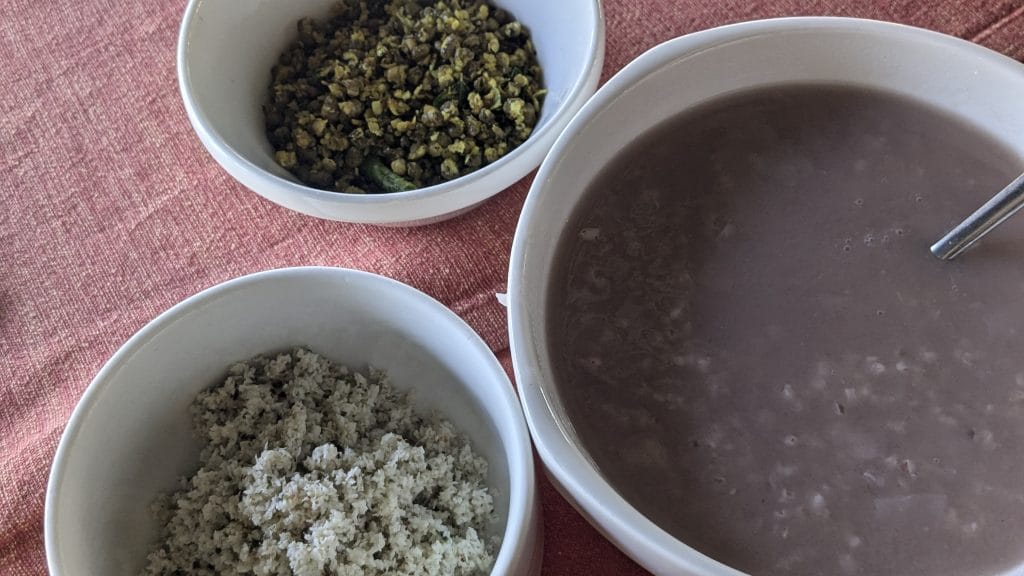
After each basti I notice a soft abdomen, deeper breathing and a very clear mental calmness.
I no longer feel constant urgency. Neither to do things nor to think about the next thing.
I am beginning to understand that many times I was not tired from overwork, but from too much unprocessed stimuli.
DAYS 20 - 21
Integrate
Treatments are reduced. The doctor talks about daily routine: regular schedules, warm meals, real rest, fewer screens.
Last night I realize something concrete: I haven't had insomnia in three weeks. I haven't felt anxiety for no reason. I have not needed to be constantly distracted.
My digestion is stable. My energy is steady. There are no peaks and troughs.
What changed
Panchakarma did not make me feel euphoric.
It made me feel regulated.
The combination of simple nutrition, fixed schedules, reduction of screens, early rest and physical treatments on the nervous system has an enormous cumulative effect.
I understood that calm is not a luxury.
It is a physiological condition that needs structure.
And above all, I understood something very practical:
When the body is clean and the nervous system is regulated, the mind stops constantly looking for something to distract it.
And today I write these lines as a first approach, an honest summary of what have been these 21 days in front of the sea. Later on I will share the complete experience, with my medical notes, the changes registered and the detailed analysis of each phase of the treatment, as well as many photos that support the changes and the experience... when I finish developing the project I am preparing for the Master's Degree in Journalism I am studying. Because this experience does not deserve to remain only in memory; it deserves to be told with rigor and depth.

Leave a Reply